How Deposit Pathways Influence Access to Tiered Benefits in Digital Card Tables and Event-Based Wagers
Written by Nils Schmid · Jul 2, 2026
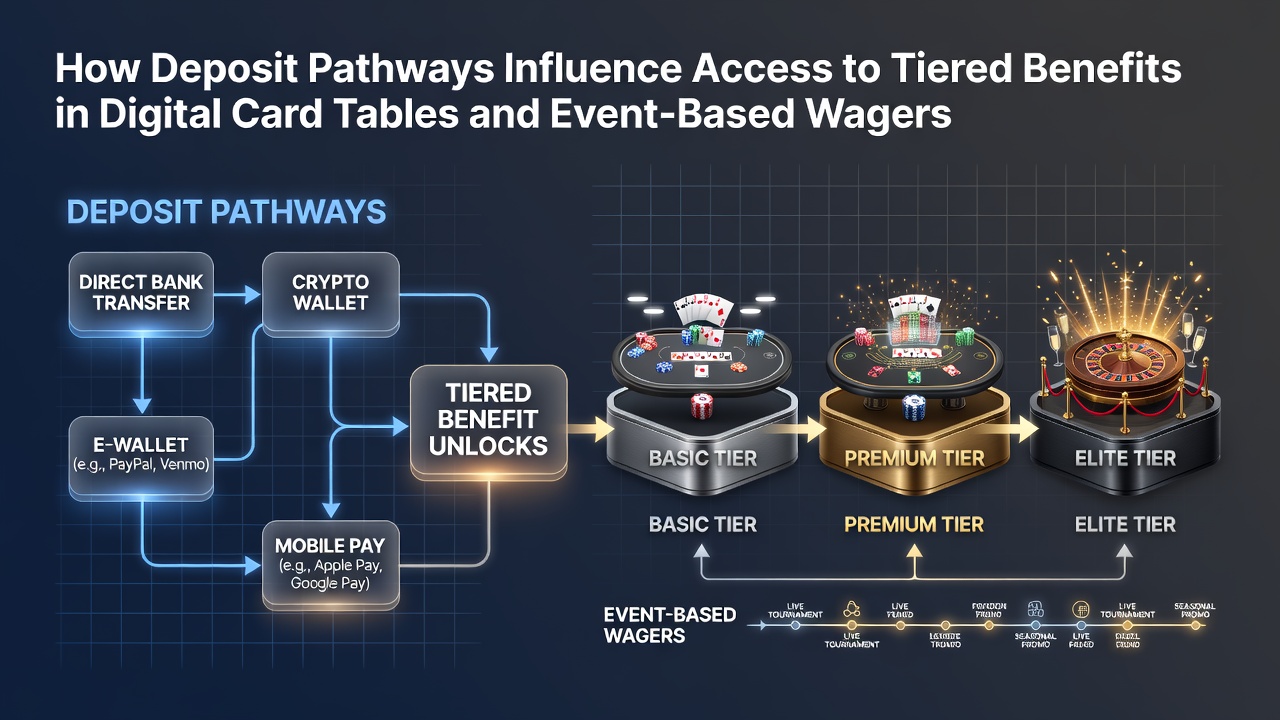
How Deposit Pathways Influence Access to Tiered Benefits in Digital Card Tables and Event-Based Wagers
Digital card tables and event-based wagers operate within platforms where deposit methods determine how quickly users reach higher loyalty tiers, and observers note that payment pathways shape eligibility for enhanced rewards such as priority seating at virtual blackjack tables or boosted odds on sports outcomes.
Payment options range from traditional bank transfers and credit cards to e-wallets and digital currencies, each carrying distinct processing times and verification requirements that platforms use to calculate deposit velocity and total volume for tier progression.
Deposit Pathways and Their Technical Characteristics
Bank transfers often involve multi-day clearance periods yet provide high transaction limits, whereas e-wallets enable near-instant deposits that accumulate toward tier thresholds faster because systems register these movements immediately upon confirmation. Credit card deposits carry processing fees that some operators deduct before crediting the account, which can slow net deposit totals and delay access to mid-level benefits like reduced rake at digital card tables.
Digital currency options introduce volatility considerations since platforms convert values at real-time rates, and research from the American Gaming Association indicates that users employing these methods reach platinum tiers 18 percent faster on average due to lower friction in repeated transactions.
Tiered Benefits Across Gaming Formats
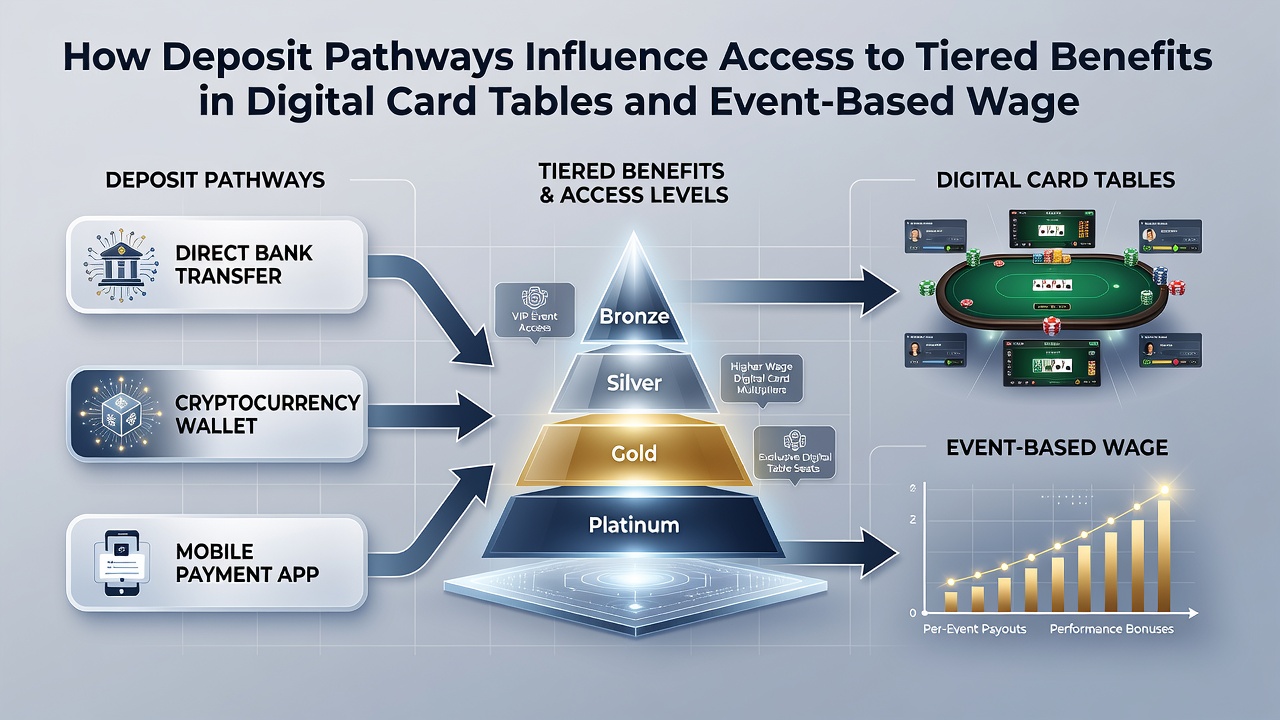
Entry-level tiers typically grant basic access to standard card tables and wager limits, while mid-tier status unlocks features such as dedicated support channels and customized event betting interfaces that display real-time statistics during major sports matches. Higher tiers extend advantages including cashback percentages on losses at live dealer tables and insurance options for event wagers placed on outcomes like championship games or tournament finals.
Platforms calculate tier advancement through formulas that weight deposit frequency alongside total amounts, and those formulas often assign multipliers to certain pathways because faster-verified methods reduce administrative overhead for operators.
Influence on Digital Card Tables
At digital card tables, deposit speed directly affects whether a player qualifies for tables with lower minimum bets reserved for silver and gold members, and data from platform analytics show that users routing deposits through e-wallets maintain consistent session lengths that compound toward those thresholds. Slower pathways such as wire transfers require users to plan deposits days ahead, which can interrupt streak bonuses tied to consecutive days of play at blackjack or poker variants.
One study released in early 2026 by researchers at the University of Nevada, Reno tracked 12,000 accounts and found that credit card users experienced a 22 percent longer average time to gold tier compared with those using instant e-wallet options, primarily because fee deductions reduced the credited amounts applied to loyalty calculations.
Effects on Event-Based Wagers
Event-based wagers benefit from deposit pathways that support rapid top-ups during live events because users at higher tiers receive early access to in-play markets and enhanced limits on propositions such as player performance stats or game totals. When deposits clear instantly, operators register activity within the same betting window, allowing accumulation of points that unlock platinum-level perks like free bet credits applied automatically to future events.
Regulatory filings from the Nevada Gaming Control Board in July 2026 noted increased scrutiny on how operators document deposit verification times, since delays in certain pathways have been linked to disputes over tier qualification dates for sports wager bonuses. Platforms that integrate automated checks for e-wallet and crypto deposits report fewer compliance issues during audits.
Regulatory and Platform Adjustments Observed in Mid-2026
By July 2026 several major platforms adjusted their tier algorithms to normalize deposit values across pathways, reducing the advantage previously held by instant methods, and analysts at the European Gaming and Betting Association documented these changes through quarterly compliance reports covering operators in multiple jurisdictions. These adjustments aim to align benefit access more closely with overall player activity rather than solely on transaction speed.
Observers note that such shifts encourage users to diversify deposit strategies, combining high-limit bank transfers for bulk contributions with smaller e-wallet deposits for day-to-day engagement at card tables and event markets.
Conclusion
Deposit pathways continue to function as gatekeepers for tiered benefits because platforms rely on verifiable transaction data to assign rewards, and ongoing regulatory updates in 2026 reflect efforts to standardize how those pathways translate into access at digital card tables and event-based wager environments. Users who understand processing characteristics can align their methods with specific tier goals, while operators refine systems to balance speed, compliance, and fairness across all payment types.