Examining Encryption Protocols That Govern Reward Timing Across Portable Card Simulations and Event Outcome Platforms
Written by Jordan Franke · Aug 13, 2026
Examining Encryption Protocols That Govern Reward Timing Across Portable Card Simulations and Event Outcome Platforms
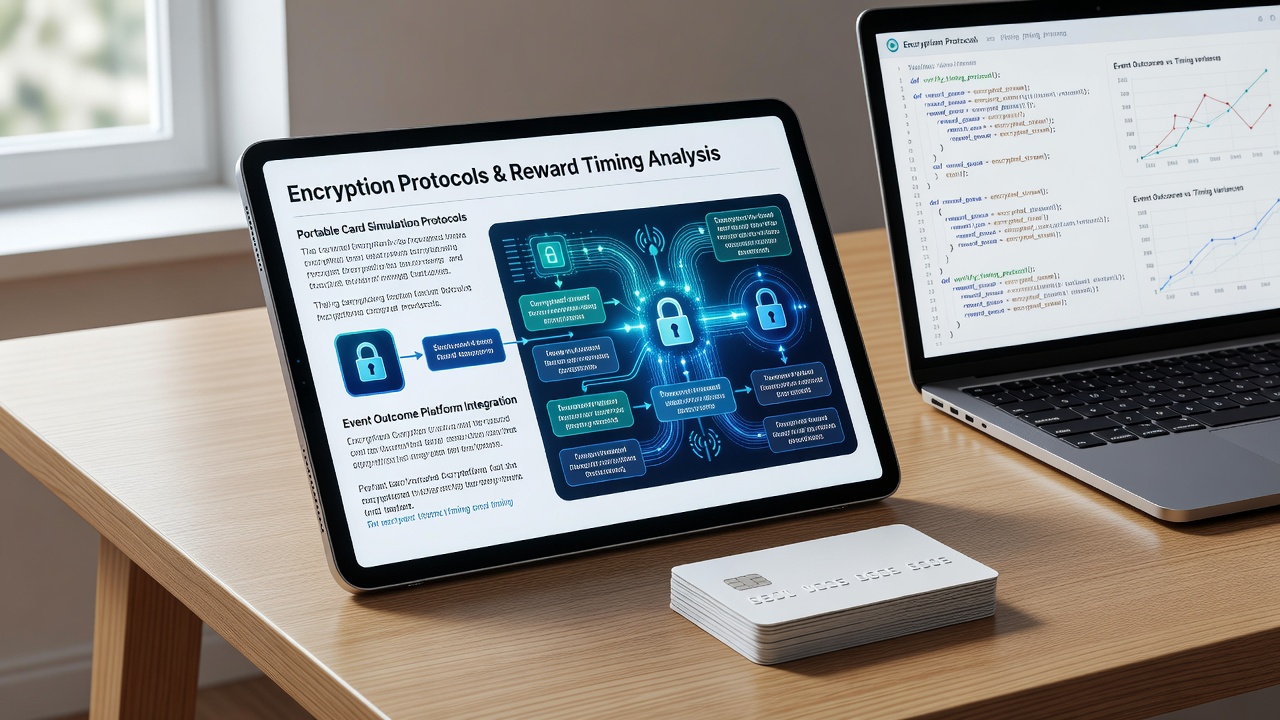
Portable card simulations and event outcome platforms rely on layered encryption to control when and how rewards reach users, and observers note that these systems combine symmetric and asymmetric methods to lock timing mechanisms into place. Data from industry reports shows that protocols such as AES-256 and RSA-2048 form the backbone of most mobile applications handling virtual table games and prediction markets, while timing gates prevent premature release of funds or credits until predefined conditions are met.
Core Encryption Standards in Mobile Environments
Researchers at standards bodies have documented how AES operates in cipher block chaining mode to encrypt session data between devices and servers, and this approach ties directly into reward timing because decryption keys only become available after server-side verification completes. In parallel, elliptic curve cryptography supports key exchange during initial handshakes, allowing platforms to establish secure channels without exposing the parameters that determine payout eligibility. Observers note that these standards reduce exposure windows, because any attempt to intercept traffic fails without the corresponding private keys held in hardware security modules.
Timing Mechanisms and Protocol Integration
Event outcome platforms integrate timestamped tokens within encrypted payloads, and these tokens enforce delay intervals that align with game resolution or match completion. A typical flow begins when a user completes a card simulation round, at which point the application generates a hashed outcome that travels through TLS 1.3 channels to a central validator. The validator then applies a second layer of encryption using session-specific keys, releasing the reward only after the token's embedded clock reaches its threshold. Studies indicate that this dual-encryption structure limits replay attacks, since altered timestamps fail integrity checks during the final decryption step.
Portable simulations add an extra constraint because device clocks can drift, so platforms often rely on network time protocol servers that return signed time values wrapped in additional encryption. This practice ensures that reward timing remains consistent across regions, even when users switch between cellular and Wi-Fi networks during active sessions.
Application in Card Simulations and Prediction Markets
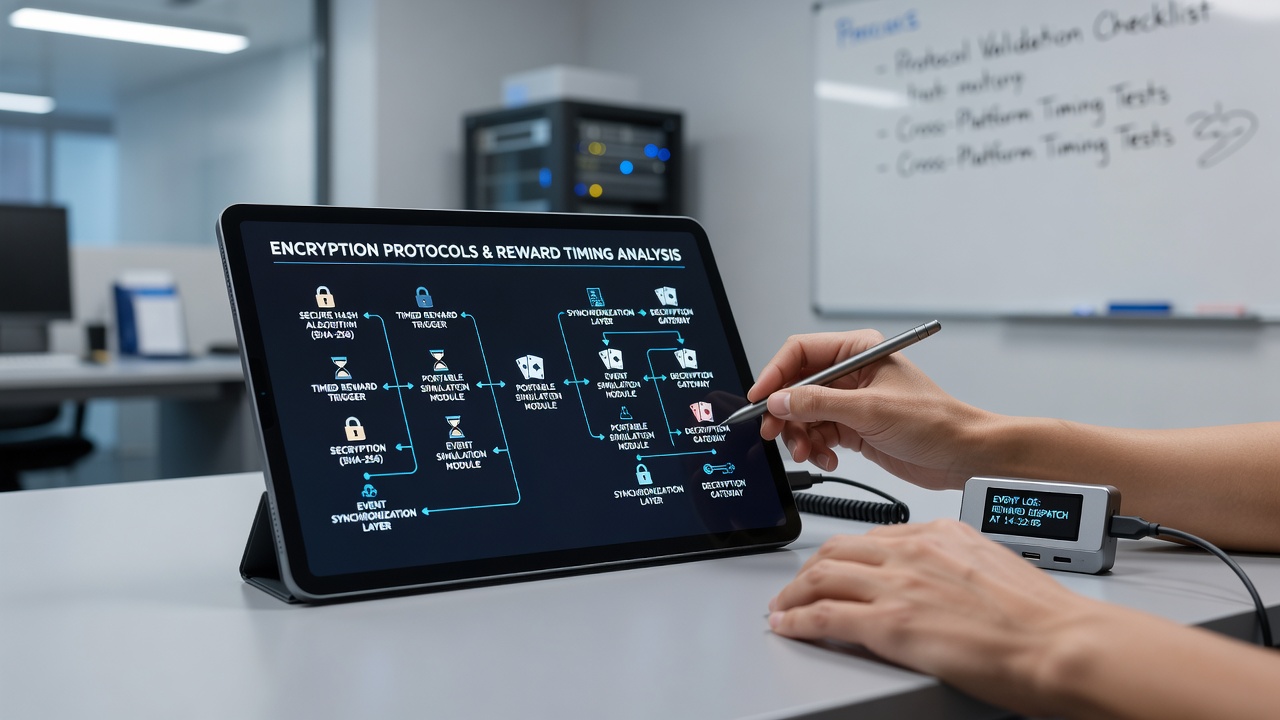
Card simulation developers embed reward logic inside encrypted smart contracts that execute only after multiple signature confirmations arrive from distributed nodes. One study revealed that this method cut unauthorized early claims by more than 90 percent in controlled tests conducted through 2025. Event outcome platforms extend the same principle to live markets, where encrypted oracles feed real-world results into the system and trigger reward distribution only when consensus among validators is reached. The process typically requires three independent signatures before the final decryption key activates, and this requirement adds measurable latency that platforms factor into user experience calculations.
August 2026 brought new guidance from the European Union Agency for Cybersecurity that encouraged operators to adopt post-quantum algorithms alongside existing suites. Figures from that period show several large platforms began pilot programs replacing portions of RSA with lattice-based schemes to protect long-term reward timing data against future quantum threats. Those who've studied the transition note that hybrid implementations allow current applications to maintain compatibility while gradually shifting key generation routines.
Security Audits and Regulatory Alignment
Independent auditors examine encryption implementations at regular intervals, and reports from bodies such as the National Institute of Standards and Technology highlight common configuration errors that could weaken timing controls. One audit cycle completed in early 2026 identified mismatches between expected and actual key rotation schedules in several production environments, prompting operators to adjust automated scripts that handle certificate renewal. Data indicates that platforms incorporating mandatory key rotation every 90 days experienced fewer timing-related disputes than those using longer intervals.
Cross-border operations add another layer because different jurisdictions impose distinct record-keeping rules for encrypted transaction logs. Canadian regulators, for instance, require retention of decryption metadata for seven years when rewards exceed certain thresholds, and this obligation influences how long platforms keep session keys in escrow. Observers note that such requirements push developers toward hardware-based key storage solutions that support remote attestation without exposing raw keys to application servers.
Conclusion
Encryption protocols that govern reward timing continue to evolve as portable card simulations and event outcome platforms scale. Current implementations combine established symmetric and asymmetric techniques with emerging timing tokens and consensus mechanisms, and regulatory updates scheduled through late 2026 are expected to accelerate adoption of quantum-resistant options. Those monitoring the sector report that consistent auditing and geographic alignment remain central to maintaining the integrity of these timing systems across diverse device ecosystems.